

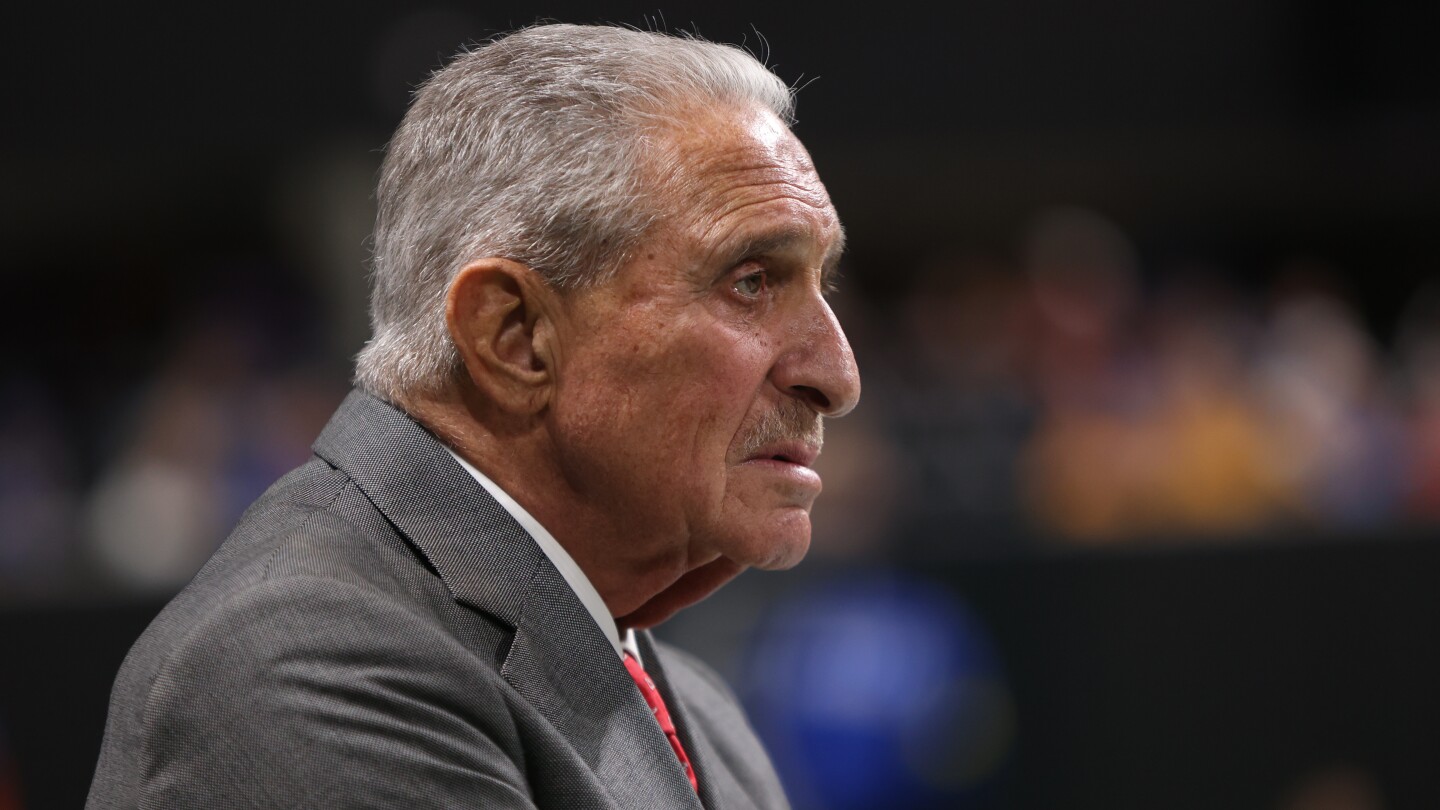
As the World Cup creeps closer, the prices keep shooting higher. In Atlanta, at the stadium that has shed its name temporarily at the behest of fútbol behemoth FIFA, Falcons owner Arthur Blank is committed to keeping low-cost concessions in place at the venue where eight matches will be played.
In an interview with WSB-TV, Blank made it clear that “fan-friendly” pricing for food and drink won’t change at the once and future Mercedes-Benz Stadium.
“Fans give us their energy, their time, their passion, their resources, their families, whatever it may be, and we need to honor that in the truest sense of the word, whatever we can,” Blank said.
Look at the menu. Hot dogs are only $2. Popcorn is $2.
FIFA doesn’t share that same view. Earlier this week, FIFA tripled the price of the remaining tickets to the July 19 World Cup final, offering seats for as much as $32,970 each. And that’s before the tickets land on resale platforms, where the prices will go even higher.
FIFA president Gianni Infantino recently defended the pricing, attributing it to the market. Where FIFA will be raking in plenty of money via the 30-percent cut (15 percent from the buyer, and 15 percent from the seller) that FIFA gets for tickets resold on its exclusive ticketing platform.
The issue landed on the radar screen of the U.S. president, with Donald Trump being informed that tickets to the U.S. opening match against Paraguay start at $1,000.
“I did not know that number,” President Trump told James Franey of the New York Post. “I would certainly like to be there, but I wouldn’t pay it either, to be honest with you.”
That $1,000 is nothing. On the FIFA resale platform, tickets to the World Cup final were priced as high as $11,499,998.85. If a ticket sells for that amount, FIFA will walk away with nearly $3.5 million on that transaction alone.
Yes, the market is the market. Everything is worth whatever someone will pay for it. There’s a point at which the number becomes obscene — and at which it locks out the vast majority of day-to-day fans who support the sport zealously during the four years between World Cup tournaments.
Don’t expect FIFA to undergo an epiphany, not after Infantino gets the final report of the total profit generated by the 2026 World Cup. The point, for now, is that Blank deserves credit for not putting a thumb (and both hands and elbows) on the scale at a time when everyone else connected to the event seems to be doing so.
Read the full article here