
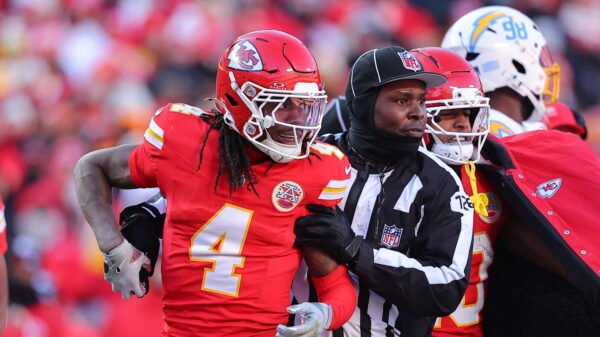











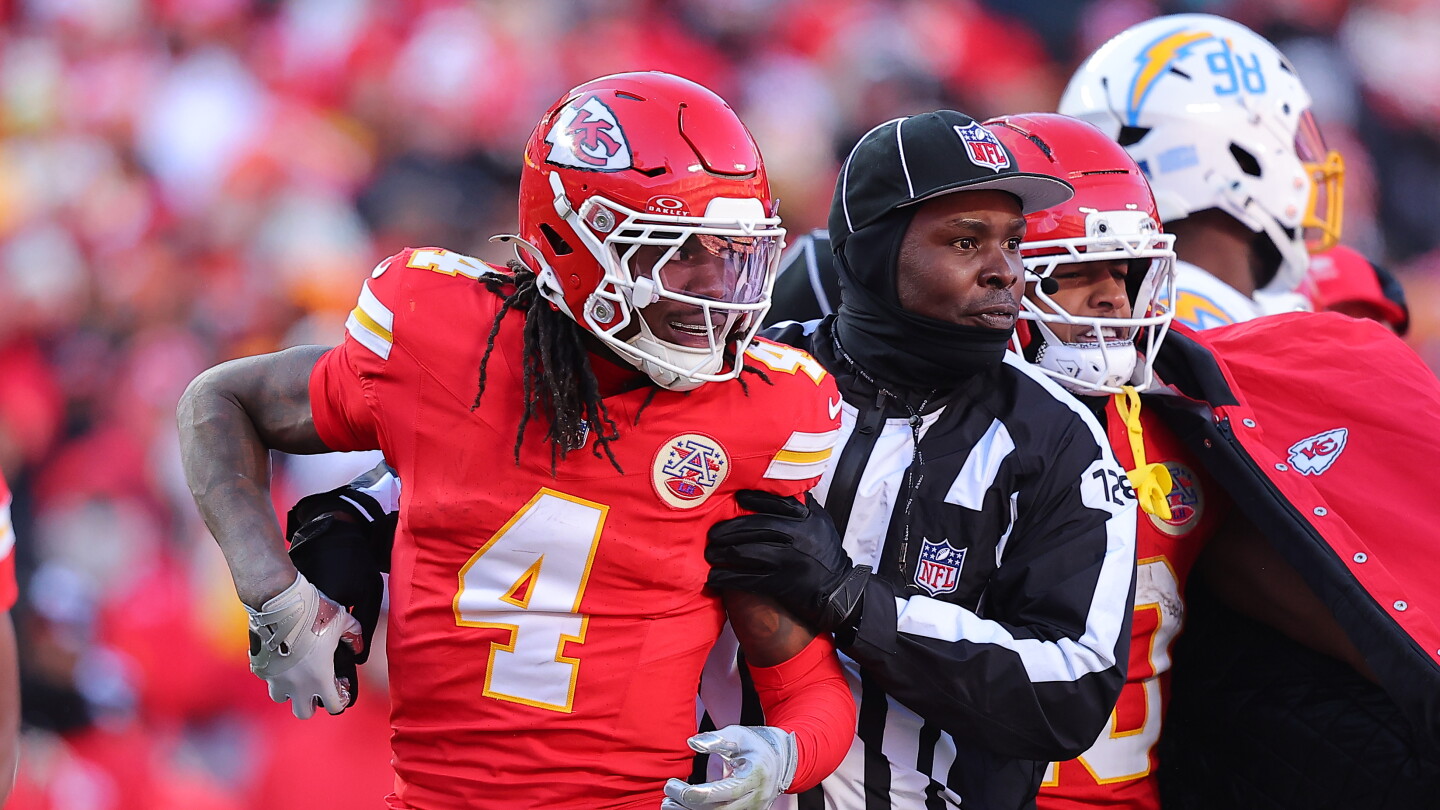
Last year, Chiefs receiver Rashee Rice agreed to accept a six-game suspension under the Personal Conduct Policy after pleading guilty to multiple charges arising from a street-racing incident in March 2024. Now that Rice has landed behind bars for 30 days after violating the terms of his probation, the question becomes whether the league will take further action against him.
It becomes a legal question. And the answer could come from multiple relevant documents.
First, the Personal Conduct Policy possibly applies to Rice’s probation violation. The list of prohibited conduct contained in the Personal Conduct Policy includes “[i]llegal possession, use, or distribution of alcohol or drugs.”
The question becomes whether a probation violation arising from a positive THC test amounts to the “illegal use of drugs.” One on hand, Rice didn’t commit a fresh violation of the law. He did something he was told not to do during his five years of probation. (It’s very common for probation arrangements to mandate avoidance of alcohol or drugs.) On the other hand, his use of marijuana triggered an incarceration.
The Personal Conduct Policy also includes a broad catch-all provision prohibiting “conduct that undermines or puts at risk the integrity of the NFL, NFL clubs, or NFL personnel.” It would be a reach, in our view, to dub a basic probation violation based on a positive THC test as conduct that undermines the integrity of the NFL.
That doesn’t stop the league from trying to discipline Rice under the Personal Conduct Policy. Judge Sue L. Robinson has final say only as to the fact-finding portion of the process, and the facts of this one are undisputed. The league would have the right to appeal the final decision of Judge Robinson to the Commissioner, which gives the Commissioner ultimate control over the interpretation and application of the Personal Conduct Policy in cases of probation violations.
Second, the agreement between the NFL and Rice that resulted in Rice accepting his initial six-game suspension possibly includes language regarding the potential consequences of a probation violation. Without seeing the agreement, there’s no way of knowing whether it does or doesn’t. (If Rice’s agreement lacks such language, the Rice case could result in the league adding a term to similar agreements in the future.)
Third, the NFL’s Substance Abuse Policy has a provision that applies to violations of the law regarding “substances of abuse” (which includes marijuana). It allows the Commissioner to suspend the player for up to four games. But it does not mention a violation of law arising from a probation violation; the list consists only of a violation resulting in a conviction, an admission, “a diversionary program, deferred adjudication, disposition of supervision, or similar arrangement including but not limited to nolo contendere.”
The league could try to argue that a probation violation based on marijuana use falls into one of those categories. Unlike appeals under the Personal Conduct Policy, appeals under the Substance Abuse Policy are resolved by an arbitrator jointly hired and paid by the NFL and the NFL Players Association.
The threshold question is whether the league wants to take action against Rice. If it decides to do so, there are multiple potential avenues for doing so.
Maybe the NFL will decide that 30 days in jail is enough. Rice will miss the most important part of the offseason program. He’ll miss the mandatory minicamp, and likely be fined upwards of $100,000. He won’t be able to rehab his recent knee surgery. Or maybe the league will decide that Rice caught a break with his original suspension, given the behavior that caused it.
Regardless, the league has the same kind of broad discretion that a prosecutor does when it comes to deciding whether to charge or not to charge someone with a crime. If the NFL wants to target Rice, it can try. And, if the effort lands under the Personal Conduct Policy, the Commissioner will have the final say as to whether the suggested discipline will stick.
For now, the league is saying nothing. In time, it will become clear whether the league does, or doesn’t, plan to sideline Rice to start the 2026 season.
Read the full article here