














A few weeks ago, I decided that there had to be a better way to figure out which baseball players were making meaningful changes to their approach. I used tools like Process+ and the Statcast rolling leaderboards, but I wanted to try to spot trends or changes before they led to clear performance boosts, and everybody in my leagues was adding the player I was researching. So I built a database.
I’m not a coder by nature, so I will admit to using AI for help with the coding, but the design was something I had been thinking about for a while. I took some of my preferred indicators that could be used to spot shifts in performance and added them to a database. That included results-stats like exit velocity and barrel rate, or velocity increases and usage changes for pitchers. It also included process-based stats like swing rate, chase rate, pull air rate, two-strike usage for pitchers, etc., and it also included biomechanical indicators like arm angle for pitchers or batting stance changes for hitters. I then had the database set up to flag any meaningful changes across segments of 50 plate appearances (or about three starts for a starting pitcher).
What that led to was me having an evolving database of hitters and pitchers who were doing new things that deserved my attention.
Now, some of it was not as useful. You can have pitchers who stop using a pitch for two starts because of hitter handedness, or you can have a hitter who has a surge in barrel rate without anything else changing in their process or swing mechanics. However, by having something flag these names for me, I’m able to dig into each name and see if there is something tangible happening under the hood.
As a result, I can now share some of those changes with you. Two weeks ago I did that with some hitters, so today it’s time to look at some recent changes for starting pitchers of note.
Tyler Mahle – Braves (Fastball Velocity/Locations, Splitter Usage)
Mahle was traded to the Braves in an underrated deadline move. In five starts with his new team, he has a 1.48 ERA, 0.96 WHIP, and 27.4% strikeout rate in 30.1 innings. Some of this could simply be tied to the fact that his four-seam velocity is up (93.2 mph with the Braves vs 92.7 mph season average). He’s also keeping the four-seamer up in the zone 67.3% of the time with the Braves, which is 10% more often than he has on the year. That location, and the added velocity, has led to a 14.5% swinging strike rate on his four-seamer over these five starts, which is well up from his 8.9% mark on the season.
Another important change for Mahle has been that he has leaned into his splitter far more often with Atlanta, throwing it 38.5% of the time with the Braves, after throwing it a little over 26% of the time with the Giants. He’s also been throwing the splitter harder, averaging 86.8 mph with Atlanta, which is almost one mph up from his season average. That has cost him some drop, but he has a 72.5% strike rate on the splitter with the Braves, which is up from 66% before being traded. He’s missing slightly fewer bats on the pitch, but now that he’s throwing it more often and getting it in the zone, he’s getting more weak contact. Especially since he’s pairing that low splitter with a four-seamer that is elevated up in the zone more often, allowing the pitches to work more in tandem.
Payton Tolle – Red Sox (Cutter Shape)
Over his last four starts, Payton Tolle’s cutter has shown a clear shape change that is leading to worse results. On the season, his cutter has had about seven inches of vertical movement, but it has been up around 10 inches over his last four starts. Additionally, its cut has decreased from about three inches down to basically zero and even had a start where he had arm-side movement on it. I should note that the cutter was back up closer to three inches of horizontal movement in his last start, and that was his best one over this stretch. Since we’ve seen this shape change, Tolle has seen his swinging strike rate cut from 29.2% to 17.8%, and both his xwOBA (.304 to .336) and wOBA (.264 to .287) on contact have gotten worse. Perhaps Tolle getting back the horizontal movement in his last start was a sign that he is getting his feel for the pitch back since he had a 33% swinging strike rate in that one too.
Kyle Harrison – Brewers (Arm Angle)
I think it’s pretty clear that Kyle Harrison isn’t healthy. He has not pitched well since coming back from his forearm injury, and the Brewers have already said they plan to use a piggyback with him or move him to the bullpen. Since coming back, we’ve seen Harrison’s arm angle drop and the command of his curveball worsen. Harrison is also struggling to locate his fastball at the top of the zone the way he was prior to the injury, and that’s crucial for him because he remains essentially a two-pitch pitcher. The added vertical movement on his four-seamer was a huge component of why he was succeeding with the curveball getting whiffs below the zone. I think it would be fair to chalk to struggles up to his arm simply not being 100% and not being able to get the movement/shapes he was getting earlier in the year.
Since coming back off the IL, Kyle Harrison has allowed 24 runs (17 earned) on 38 hits in 27 IP w 33/13 K/BB ratio.
— Eric Samulski (@SamulskiNYC) September 6, 2026
Andrew Painter – SP, Phillies (Arm Angle Change, Four-Seam Movement, Changeup Shape)
I wrote about Andrew Painter in detail in this article, so you should check that out. We should note that the four-seam velocity and vertical movement have not remained consistent. In his last outing, his four-seamer averaged 96.6 mph, which is totally fine, but is in line with his season-long averages. He also had great 18.2 inches of vertical movement on the pitch in this outing; however, on September 2nd, that was down to just 17 inches. The increased vertical movement and velocity were a big part of why Painter was having so much success because he didn’t have to hide his fastball so much. The fact that those components are inconsistent is not a surprise for a young pitcher who is figuring some things out, but it is something that we need to make note of.
Walbert Urena – Angels (Four-Seamer Usage, Changeup Usage)
On August 11th, the Angels fired most of their pitching coaches. Since then, he’s posted a 2.43 ERA, 0.94 WHIP, and 23.3% strikeout rate in 29.2 innings across five starts. Over this stretch, he’s made a clear pitch change, reducing his four-seam usage from 22% to just over 14%, while increasing his sinker usage from 30% to 37%. With his secondaries, he has reduced his sweeper usage from over 15% to 10.5% and increased his changeup usage from 32% to 38%. Against righties, specifically, Urena has dropped his four-seam usage down to 6% (from 19%), while increasing his sinker usage by 8% and his changeup usage by 9% up to 28%. He’s started to use that changeup more in two-strike counts to righties, and it continues to be a successful pitch for him. He also commands his sinker far better against righties than his four-seamer, which is part of the reason his WHIP has improved. He’s attacking the zone better to righties and also getting more groundballs with that 91 mph changeup. The increased changeup usage against righties has also led to a 19% swinging strike rate off righties over his last five starts, which is a nice step up for Urena.
In short, he’s throwing his best pitch more often, using it more often in two-strike counts, and also changing up his fastball usage to prioritize pitches he can command. All of that sounds good to me.
Ryan Johnson – Angels (Sinker Usage, Splitter Usage)
Johnson is another Angels starter who has changed his mix since the Angels changed their pitching coaches. In five starts with the new coaching staff, Johnson has a 1.63 ERA, 1.01 WHIP, and 18.5% strikeout rate. That has coincided with a change from throwing his sinker 27% of the time down to 5.5% and reducing his splitter usage from 26% to 16%. He has also increased his cutter usage from 30% to 50.7% and his sweeper from 16.6% to 27.6. Both his sinker and splitter grade out poorly on Stuff models, and his splitter has below-average strike rates and zone rates against lefties, so using it less often makes sense. Similarly, Johnson doesn’t command his sinker well, and lefties hit it really hard, so it’s not a pitch he needed to throw as often. The issue is obviously that being cutter and sweeper heavy is great for right-handed lineups and not so good against lefties. Over these last five starts, he has an 11.2% swinging strike rate against righties and an 8.2% mark against lefties. The good news for him is that the contact he’s allowing to lefties has been mostly on the ground and not overly hard, so he’s been getting away with it because of that cutter. I’m not sure that’s a gamble I’m willing to take, but this profile is intriguing if Johnson can continue to build on it for next season.
Aaron Nola – Phillies (Four-Seam Usage and Locations)
Over his last seven starts, Aaron Nola has pitched to a 2.50 ERA, 1.26 WHIP, and 27.6% strikeout rate. That’s a dramatic improvement over his first 21 starts, when he posted a 5.82 ERA, 1.45 WHIP, and 23.6% strikeout rate. A big reason for that success has been a shift in his four-seam fastball usage and locations. This season, Nola has allowed a .360 average on pitches up in the zone compared to a .250 average everywhere else. Additionally, he has allowed a 48.2% hard-hit rate up in the zone but just a 39% rate on pitches middle/low. Nola adjusted to that by locating more of his pitches in the lower third of the zone or below as the season has progressed. Roughly 56% of his pitches were down in the lower third in the first half of the season, but that’s grown to nearly 64% in his last 5 starts.
The two biggest culprits up in the zone are his four-seamer and cutter, but he doesn’t throw the cutter enough for it to have a major impact. However, his four-seamer has allowed a .405 average up in the zone, with a 51.3% hard-hit rate and 12.8% barrel rate. As a result, Nola has been drastically reducing his four-seam usage upstairs. In the first half of the season, he threw 49.2% of his four-seamers up in the zone. For the entire second half, that mark is 40.4%, but it’s just 36.7% over his last seven starts. He is still using the four-seamer at about the same rate in two-strike counts, so the reduction in four-seamer usage has been early in the count. The plan appears to be working since the batting average against his four-seamer has fallen from .410 in his first 14 starts to .269 in his next 14 starts. His barrel rate has also fallen from 19.6% in the first half to 4.3% over his last seven starts. The hard-hit rate against the four-seamer is up, but his groundball rate has exploded from 14.3% through his first 21 starts to 39.1% over his last seven, while his fly ball rate has dropped from 44.3% to 21.7%. The summary is that Nola realized his four-seamer was an issue for him up in the zone, so he drastically cut his usage in the upper third of the strike zone. While he’s losing whiffs on his four-seamer and giving up hard contact, almost all of it is on the ground, so he’s not allowing as much damage.
Ian Seymour – Rays (Slider/Sweeper Shape and Usage)
Over the last five outings, Ian Seymour appears to be toying with his slider shapes. On the season, Seymour has thrown an 81.6 mph sweeper with nearly 13 inches of horizontal movement and an 83.2 mph slider with about four inches of vertical movement. However, over the last few appearances, his sweeper is becoming harder and tighter, averaging 83.1 mph with about 9.5 inches of horizontal movement. The slider has also had a tighter break (around two inches of horizontal movement), which he’s clearly changing to attack righties. In his last five starts, he’s used the slider 16% against righties, which is a sharp increase from the 5% usage he has on the season. He’s throwing it early in counts about 74% of the time and has an elite 75.5% strike rate on the pitch to righties with a 28.3% swinging strike rate. This seems to have coincided with him using his changeup less often in early counts to righties and saving it as more of a swing-and-miss offering late in the count. He’s also been using his sinker more often to righties over the last five starts, perhaps to pair with the slider early in counts. What we do know is that righties have a nearly 17% swinging strike rate off Seymour in these last five starts, but are hitting the ball hard and posting a .266 average.
Seymour has also been using his sweeper just 10% of the time against lefties over these last five starts, which is a massive drop from the 23% usage against lefties on the season. The swinging strike rate is still 20%, and he has a 60% zone rate and 90% strike rate, so it’s unclear why he has moved away from the sweeper so much to lefties. Perhaps the movement change isn’t conscious but rather him struggling for the feel of the pitch. However, since he’s still throwing it for strikes and getting swinging strikes, that confuses things. This all could just be connected to him making adjustments to compensate for some prolonged struggles with his changeup. I do like the harder of the harder slider being used for strikes against righties, so not all the changes are bad, but this has been a poor stretch for Seymour.
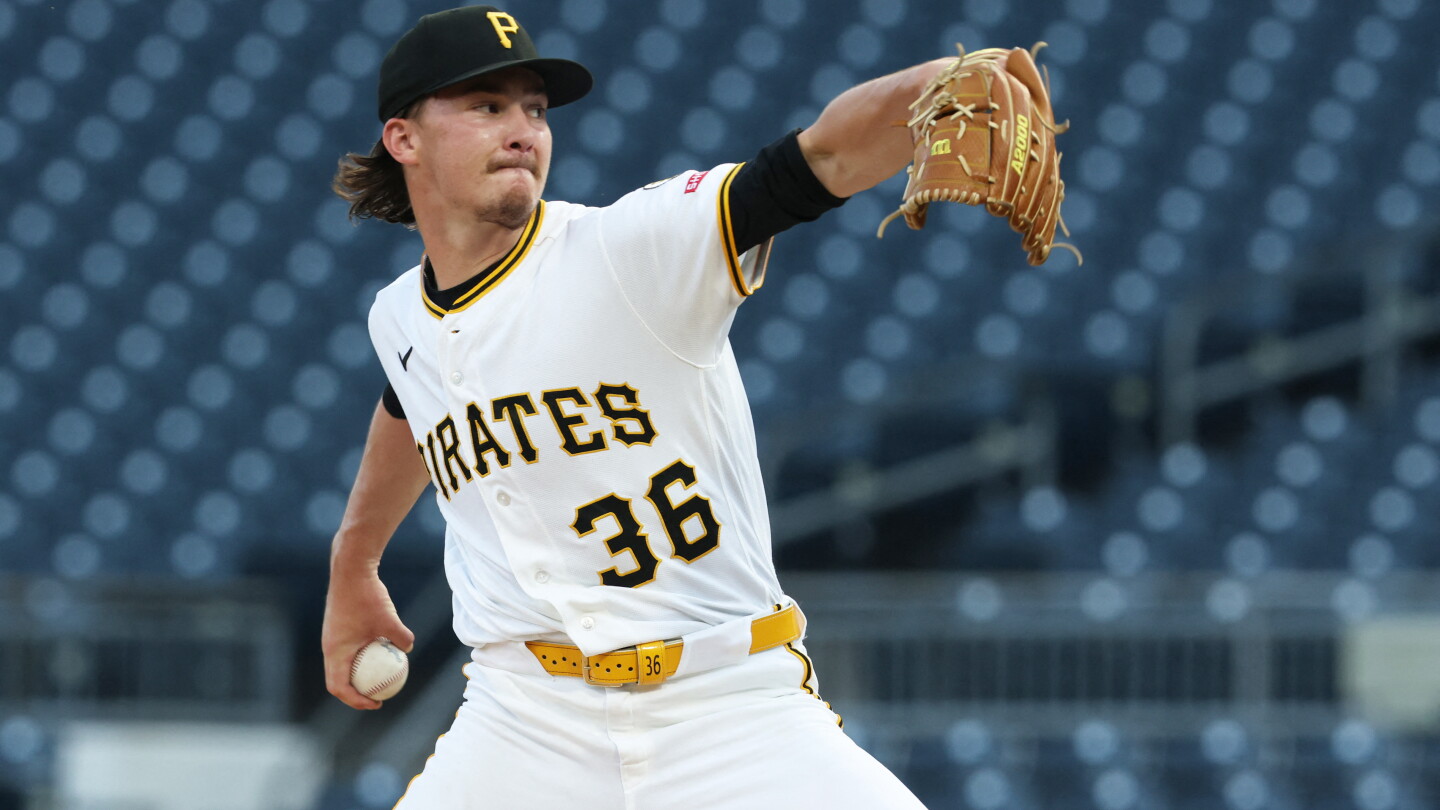
Bubba Chandler – Pirates (Arm Slot Changeup Shape, Slider Velocity/Shape)
Bubba Chandler has been tweaking things throughout the season, changing the shape on his slider and also messing with his arm angle, which drops to around 38-39 degrees in July after being around 47-48 degrees earlier in the season. The lower arm angle has cost him some vertical movement on the four-seamer, but he has done a good job commanding the pitch up in the zone, and it’s still getting tons of whiffs, even sometimes around 16 inches. The lower arm angle could also be making it easier for him to command this harder slider that’s coming in around 91 mph with about 1.5 inches of horizontal movement. The slider acting more like a cutter could also be a reason why his four-seamer, which he throws over the top of it, continues to get whiffs despite not always having elite vertical movement. The lower arm angle has also made the command of his sinker better, which has given him, essentially, three fastball variations he can use. We’ve seen other young starters like Gavin Williams and Cade Cavalli make similar adjustments that led to a big bump in results.
We’ve also seen Chandler change his changeup into more of a kick changeup. His old, traditional change averaged 91.7 mph with 7.2” vertical movement and 17” arm-side movement. His newer changeup is around 89.5 mph with 13 inches of arm-side run and essentially 0″ of vertical break, which means it’s about two mph slower with more drop and less arm-side run. He has had some struggles commanding the new changeup, but it has flashed whiffability against lefties (on 8/21 and 8/26), which would be a nice complement to a right-handed approach that has the three fastballs or two fastballs and a hard slider. I expect some ups and downs here as he continues to tweak some of his approach, but we’re seeing the beginnings of an attack plan that could have Chandler reach the peak we thought was there for him when he was a prospect.
Bubba Chandler registered a 40% whiff rate on his 4-seam fastball last night. That’s around 18% better than his season average with the pitch (22.3%). #Pirates
— Jason Shetler (@Jason_Shetler) September 9, 2026
Clay Holmes – Cubs (Arm Angle Change, New Cutter Shape)
Since coming to the Cubs, Holmes has used his cutter 16% of the time (34.3% to righties), which could be because he seems to have morphed the pitch into more of a slider shape, down to about 85.4 mph and with six inches more drop. He’s using it 26% of the time in two-strike counts, and it does have a really solid 40% PutAway Rate in those situations, so you have to wonder if he will start going to it more often. My initial thought is that he’s using it to offset some velocity loss and movement issues on his sinker. In his last two starts, Holmes has thrown the cutter about 60% of the time early in counts to righties, which is about the same as he’s used his sinker. His sinker has averaged 92.2 mph with the Cubs but was almost 94 mph with the Mets before his injury. His arm angle has also dropped, which has led to some shape changes on the sinker and could be why both his zone rate and strike rate on it to righties have decreased since returning.
Holmes still has a 3.51 ERA and 1.14 WHIP in his six starts with the Cubs, but his 15% strikeout rate brings nothing to the table for fantasy, and it’s clear that he is still adjusting to pitching after fracturing his leg. Pitching is so much about balance and weight transfer that it would make sense that Holmes would still be compensating for the injury despite returning to the mound for almost two months.
Chris Bassitt – Orioles (Curve Usage, Cutter Velocity)
Since coming back from injury, Bassitt has a 4.34 ERA, 1.48 WHIP, and 19% strikeout rate, so this is not a player you’re really running to get, but I did want to note that his cutter has averaged 90.5 mph and has been over 91 mph in two of his last three starts. He averaged just 89.6 mph on it before the injury, so that is a noteworthy change. The pitch also has a 14% swinging strike rate since returning after posting a 10% mark before the injury. Another shift has been his curveball usage. He’s used it 46.2% of the time in two-strike counts since coming back, which is way up from 34% before the injury. His curveball also has a 7% increase in PutAway Rate because he’s doing a better job of keeping it low in the zone. The curve has always arguably been Bassitt’s best pitch, so using it more in two-strike counts makes some sense. I could see him emerging as a deeper league streamer down the stretch.
Read the full article here