

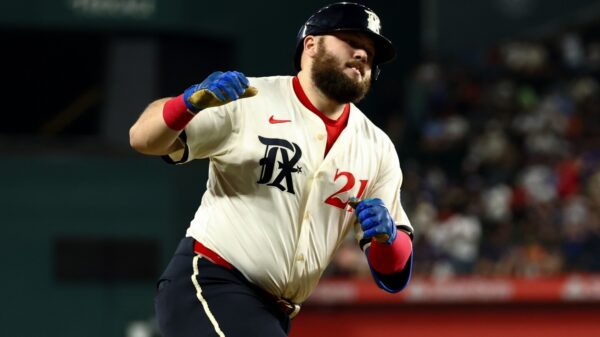












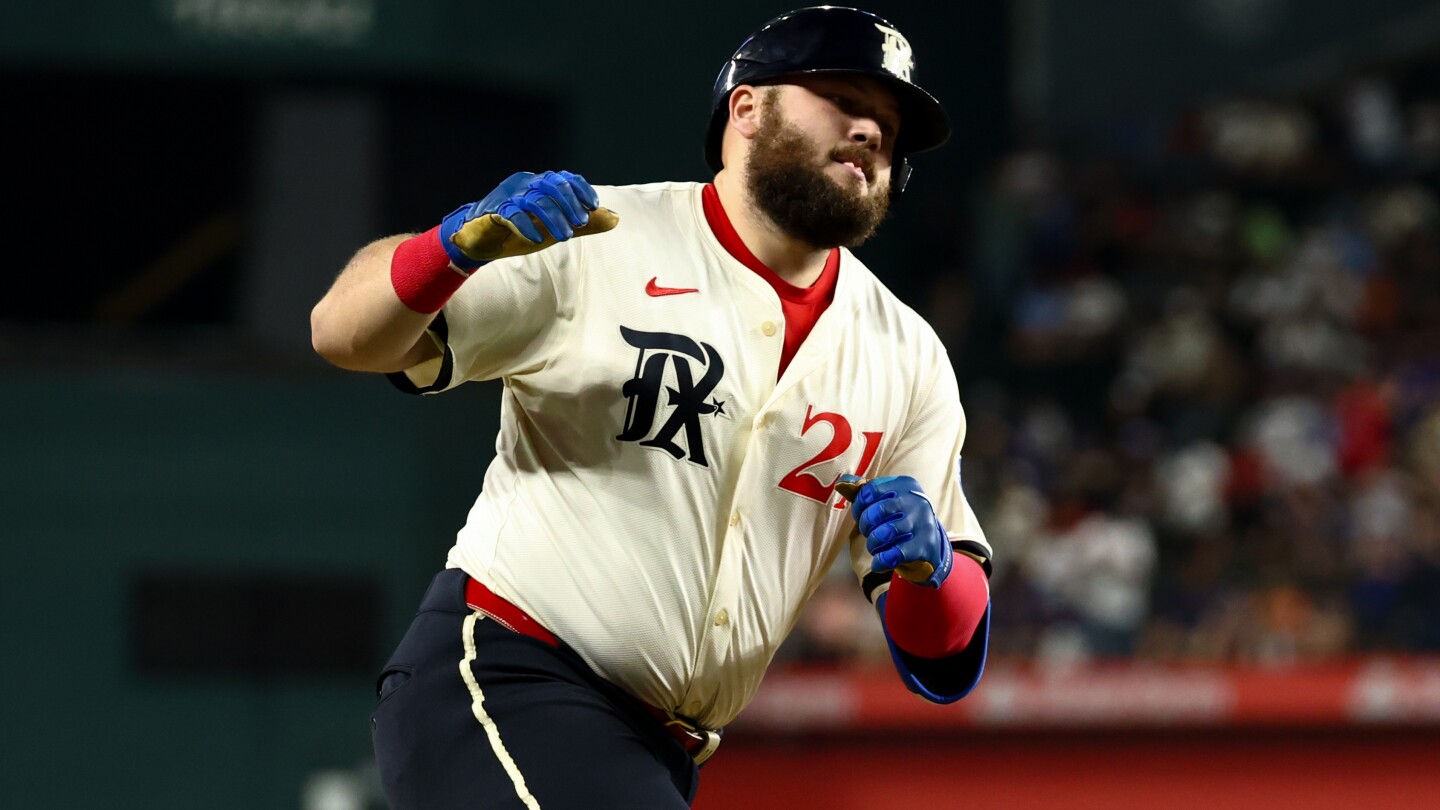
The 2025 season was meant to be a significant one for Jake Burger. He was coming off back-to-back seasons with a .250 batting average and at least 29 home runs. He had just been traded from a Marlins team that lost 100 games to a Rangers team that had won the World Series in 2023 and had designs to get back to that level again.
Yet, once the season began, seemingly nothing went right.
Burger hit .186/.229/.330 with a 30.5% strikeout rate and three home runs in 29 games to begin the season and was surprisingly demoted to Triple-A. He spent just two weeks in the minors before being recalled, but was only with the Rangers for another month before an oblique strain landed him on the injured list. Two weeks later, he was back in the Rangers’ lineup, but this time only for 10 days before a quad injury sidelined him again. Almost a month later, he was back with the Rangers, but, again, 10 days later, he found himself on the injured list with a wrist sprain.
By the time the season ended, Burger had somehow managed to play 103 MLB games despite all the stops and starts, but hit .236/.269/.419 with 16 home runs in 376 plate appearances. While the struggle to stay healthy was certainly frustrating, overcoming that was nothing new for Burger.
After the White Sox drafted him 11th overall in 2017, Burger was immediately the 8th-ranked prospect in a farm system that also included Eloy Jimenez, Luis Robert Jr., Dylan Cease, Dane Dunning, and Michael Kopech. From there, things went south. Burger ruptured his left Achilles tendon in February of 2018 and then re-tore the same tendon in May of the same year. While he was rehabbing in 2019, he injured his heel, and then COVID took away the entire 2020 minor league season. He was finally healthy again in 2021 and able to hit his way into big league opportunities in both 2021 and 2022.
For a player to overcome all of that and establish himself as a productive MLB player with three years of service time, being sent down to the minors, even for a short stint, could have been crushing. For Burger, it was more illuminating than anything.
“That short stint down there, obviously, you don’t want that to happen, but everything happens for a reason,” he reflected. “I went down there and had a lot of fun and found joy playing the game again, you know, not like grinding every single at bat. I think that’s probably the biggest takeaway from anything like that is that this is a child’s game, have fun. Go out there and just compete.”
Which is exactly what Burger tried to do last season, in between all the injuries, but the desire to produce for his new organization and teammates was equally as strong: “I was just trying to do too much. You know, trying to make up for lost time, where it’s like, damn, I was just on the IL for an oblique, then it’s a quad. I really wanted to at least try and contribute 20 home runs, so maybe it’s trying to do too much where it kind of puts you in a worse position.”
That worse position led to mechanical changes to his swing that Burger thinks impacted his power production a bit.
“I felt like I was really low to [the pull] side, and that’s where kind of the bread and butter is,” he explained. “Mechanically, it just felt like I was cutting myself off a little bit. Obviously, not being able to get in a groove with injuries and whatnot adds to that, but I feel like I was cutting myself off a little bit and not able to catch stuff out in front. I felt like I’ve made some good adjustments for that.”
A quick look at Statcast’s Swing Path Leaderboard confirms Burger’s assumption. In 2025, Burger’s intercept point, which measures how far out in front of the plate the bat and ball make contact, was much farther back than in the previous two seasons. Not getting the ball out in front of the plate as much also meant that his attack direction, the angle at which the sweet spot of his bat is traveling to the ball, was less than the last two seasons. All of which is to say that Burger was not getting the ball out in front and, therefore, not contacting the ball to the pull side at the right angles and not pulling the ball with as much authority.
As a result, Burger pulled the ball in the air just 13.5% of the time in 2025, which ranked 290th out of 348 hitters who had at least 200 plate appearances. In 2024, his Pull Air Rate was 19.8%, which ranked 91st out of 251 qualified hitters.
Getting back to his preferred contact point could be crucial for Burger since his batted ball quality was strong in 2025. “I had a conversation with [Rangers hitting coach] Justin Viele in the offseason, and it was about how most of my metrics are the exact same as they were in ’23 and ’24,” Burger explained. He still registered a 114.7 mph max exit velocity. His average exit velocity of 90.4 mph was within striking distance of his career norms, his 13.9% barrel rate was well above league average, and his 48.5% hard-hit rate was the second-highest mark of his MLB career.
So, is the solution for a productive 2026 season simply improved health?
To a certain extent, it is. That’s why, coming into spring training, the 29-year-old Burger was determined to make sure that he was on the field and available to his team far more often: “I did a lot of Pilates. I did that three times a week,” he said before a spring training game in Arizona. “For me, it’s protecting my obliques and protecting the soft tissue. It felt like Pilates would help protect those small muscles that are around the big muscles that keep them functioning every day.”
However, the other change for Burger was altering how he prepared for this season from a mental standpoint.
“The last two years, I feel like I’ve gotten a little bit away from just going out there and competing,” he admitted. “I think as hitters, we always want to look at our mechanics and try to take a magic pill, like, ‘Hey, if I’m just holding my hands in this position, I’m going to be great.’ But that’s not really applicable when you get onto the field. So, for me, this spring training has been relentlessly process-oriented and making sure I’m getting those feels every single day in the cage…I’m looking for this feel with my hands, this feel with my lower half, this feel with my torso, and just kind of like nitpicking those each in their separate bucket, and then putting it together at the end of that session. Then once I’m done with that, mechanics are out of sight, out of mind.”
The goal with this approach for Burger is to make a more conscious change in separating the mechanical preparation of hitting from the mental preparation. Once Burger is done with his work in the cage, he’s no longer focused on the minutia of his swing. Instead, he’s solely concerned with his mental approach at the plate and just going out there and playing.
“What I have that day is what I have. I’m gonna go in there, work on my approach, whatever that may be against the pitcher that I’m facing that day, and then take that out to the field. I feel like us, as hitters, sometimes, when you’re struggling and trying to do too much, you jumble up the mechanics with the approach. Those mechanics thoughts might come to you in the middle of an at- bat, and you’ve lost at that point. So I’m trying to separate those two.”
So far, the 29-year-old thinks “it’s going pretty well,” and the results would seem to support that. In his five spring games, he’s gone 3-for-11 with a home run, and his average exit velocity is right up there with the highest marks he’s had in a full MLB season. He’s pulling the ball more, making solid contact, and feels good about where he’s attacking the ball.
His Rangers career may not have started as planned, but last year’s struggles might have helped him find the joy he needed to succeed moving forward. It certainly seemed that way as he sat, beaming at his locker following two straight ping pong wins over Wyatt Langford.
“I think it’s just understanding who I am and not trying to be somebody I’m not. That’s always a good constant reminder of, hey, just go out there and have fun. Act like you’re playing whiffle ball in the backyard with your buddies.”
That new approach, plus a season of good health, could push both Burger and the Rangers back to their old heights.
Read the full article here