









Finding value is a huge part of fantasy baseball success. While you need to hit on your early-round picks, finding key contributors late in the draft is a surefire way to rocket up your standings. For me, the best place to find value is with starting pitching. I started this article three years ago to identify some starting pitchers who weren’t getting enough love in drafts. In that first season in 2023, I was able to hit on Kyle Bradish, Eduardo Rodriguez, and Bryce Miller, and the next year, we hit on Jared Jones and Reese Olson, and then last year, we landed on Lucas Giolito and Jack Leiter, who both finished inside the top 65 starters, but missed on Zebby Matthews, Jose Soriano, and Max Meyer.
The premise for this article came from The Process, by Jeff Zimmerman and Tanner Bell. In the book, they report that, in 12-team leagues, 45% of undrafted pitchers finish the season in the top 108 starting pitchers. They also found that 20% of undrafted pitchers in 12-team leagues end up inside the top 25 in season-long value and that 50% of undrafted pitchers will have top-25 weekly value at some point in the season. If you can find one of those pitchers who finishes with top 25 value, woo boy.
The goal for today is to try to unearth who those pitchers might be. Even though the top 108 pitchers drafted in these leagues include relievers, we’re going to focus on just starting pitchers who are being drafted outside of the top 108 pitchers because, statistically speaking, it’s far more likely for a starter to catapult into the top 25 than for an undrafted reliever.
For me, there are a few things that I’m looking for when trying to find a starting pitcher who could jump to the top of the heap.
- A chance at 130 innings or more
- Strikeout Upside (which, to me, means a big swing-and-miss pitch apart from a fastball)
- Fastball velocity (to me, this provides a safe floor; it’s hard to succeed around a bad fastball)
- An arsenal of three pitches or more (I believe that a pitcher needs a fastball for strikes, a secondary for called strikes, and a secondary for swinging strikes).
The ADP used is from February 11th to February 26th in NFBC Online Championships, which is 23 drafts.
⚾️ Coming soon: MLB returns to NBC and Peacock in 2026! In addition to becoming the exclusive home of Sunday Night Baseball, NBC Sports will broadcast MLB Sunday Leadoff, “Opening Day” and Labor Day primetime games, the first round of the MLB Draft, the entire Wild Card round of the postseason, and much more.
Everything you need for 2026 fantasy baseball draft season.
Fantasy Baseball Starting Pitcher Draft Values
I just wanted to briefly mention Joey Cantillo, who is being drafted as the 106th pitcher off the board in February drafts, which puts him close to this cut-off but not eligible. I wrote about him in my post-hype pitchers article, and I really like him for this season. I also really like Kodai Senga, who is the 105th pitcher being drafted, and Troy Melton, but I think he’s the 7th starting pitcher in Detroit, so he’s just a name to keep an eye on if injuries give him a shot in the rotation.
Braxton Ashcraft – Pittsburgh Pirates (ADP: 269, 108th Pitcher Drafted)
Chance at 130 innings: Right off the bat, we have a small knock against Ashcraft. He has never thrown more than 118 innings in a professional season, in part because he had Tommy John surgery in 2021, but also because he had meniscus surgery in 2020 and injured his non-throwing shoulder in 2019. However, that 118-inning season was just last year, which means that 130 innings is well within his reach this season, and I’m not overly concerned with his innings.
Strikeout Upside: Ashcraft had a 24% strikeout rate last year, with a 16.1% K-BB% and a 13.2% swinging-strike rate (SwStr%). That’s pretty solid. His slider is a strong swing-and-miss pitch to righties with a 21% SwStr% and a 25% PutAway Rate, which measures how often a two-strike pitch ends in a strikeout. He uses that slider 35% of the time in two-strike counts to righties, and because it acts more like a cutter, he can dot it in the zone or throw it off the plate. It gives him plenty of strikeout upside to righties. To lefties, he can also go to his slider. It is his most used two-strike pitch to lefties and has a 21% PutAway Rate, which is above-average. However, he also has a curve that is a hard-diving 84 mph offering that he can command in the zone or bury underneath it. That pitch also has a 24% PutAway rate versus lefties, which gives him multiple avenues to attack them.
Fastball Success: This is another slight issue for Ashcraft. His four-seam fastball is below-average. It sits at 97 mph, but Ashcraft has below-average extension on it, just average vertical movement, and it’s relatively flat, but he keeps it low in the zone more than you’d like. He can throw it for strikes, but it gets hit hard by both righties and lefties. Righties do far more damage on the four-seamer, which is relevant because Ashcraft added in a sinker that he uses just as often to righties as his four-seamer. That sinker not only limits hard contact but also induces a surprising number of whiffs to righties. I’d really love to see this become his primary fastball to righties because he needs to limit the use of that four-seamer.
Deep Pitch Mix: Ashcraft has five pitches, but really only four because he didn’t throw his changeup enough in 2025. He has three pitches he can throw to lefties (four-seam, curve, and slider), and he uses all four of his main pitches to righties. Considering his four-seam fastball is a below-average pitch, I do worry a little bit about his approach to lefties. If we consider his slider to be a cutter, then he at least has one fastball variation to lefties. However, a changeup or another pitch that he can throw away would be beneficial and could add more strikeout upside.
Confidence to finish in the top 25: 2/10. I think Ashcraft will be solid, but I don’t have tons of confidence that he has the strikeout upside to vault into the top 25 since he is also on a team that may not get him double-digit wins.
Sean Manaea – New York Mets (ADP: 279, 113th Pitcher Drafted)
Chance at 130 innings: We’ve seen Sean Manaea do this before, so there should be no doubt about his ability to put up volume. The only reason he didn’t last year was because of an injury that delayed his start to the season, and then the Mets decided to bring him back as more of a piggyback starter after they had already called up their young starting pitching prospects. The left-hander pitched 181.1 innings in 2024 and finished as the 21st-ranked starting pitcher, according to FanGraph’s Player Rater, so we know he has it in him.
Strikeout Upside: Even in a poor season last year, Manaea posted a 28.5% strikeout rate and 14.1% SwStr%, so he showed the ability to miss bats. A big part of that is a four-seam fastball that posted a 15.2% SwStr% to righties. I expect Manaea to go back to the sinker more in 2026, which means that he can use the four-seamer as a swing-and-miss pitch late in the count more often. He also has a sweeper that carves up lefties, and a changeup that had a league average SwStr% to righties in 2024 and had a strong PutAway Rate in a small sample in 2025. This isn’t the profile of a major strikeout arm, but getting back to about one strikeout per inning makes sense to me.
Fastball Success: We covered above that his fastballs are solid pitches. The four-seamer misses plenty of bats against righties, but it also gets hit harder because he struggles to get it inside on their hands. The sinker was a better strike fastball for him in 2024, which helped him to get ahead in the count. In 2024, he also did a great job of getting his four-seamer up to left-handed hitters, which paired well with the sinker that he could run in on their hands. When they work as a pair, it gives Manaea a solid fastball foundation.
Deep Pitch Mix: If we go back to 2024, because Manaea was hurt for most of last season, the left-hander used four pitches to righties in his sinker, sweeper, four-seam, and changeup. He also mixed in a cutter 8% of the time and a harder slider 6% of the time. He was predominantly just a sinker and sweeper to lefties, but he did use his four-seamer 11% of the time, while mixing in his other offerings around 5%. I’d expect him to get back to that deep mix, which has always been crucial to his success.
Confidence to finish in the top 25: 5/10. We’ve seen him do it before, and the Mets have so many unproven or erratic starters that they are going to count on Manaea for length to help save their bullpen.
⚾️ Coming soon: MLB returns to NBC and Peacock in 2026! In addition to becoming the exclusive home of Sunday Night Baseball, NBC Sports will broadcast MLB Sunday Leadoff, “Opening Day” and Labor Day primetime games, the first round of the MLB Draft, the entire Wild Card round of the postseason, and much more.
Zebby Matthews – Minnesota Twins (ADP: 294, 115th Pitcher Drafted)
Chance at 130 innings: Zebby threw 116 innings last year while battling through some injuries and threw 134.2 innings in 2024, so he should have no problem pushing close to 150. I already thought he was a better fit in the rotation than Taj Bradley or Simeon Woods-Richardson, and then Pablo Lopez got hurt, which opened up another spot. I think Zebby is all but assured a spot in Minnesota’s rotation to start the season.
Strikeout Upside: Zebby’s slider is a plus pitch. It had a 22% SwStr% last year, and it’s effective to both righties and lefties because it’s a hard, gyro slider. He throws it often in two-strike counts to all hitters, and it has plus PutAway Rates to both, with an elite 28% rate to lefties. Having a platoon neutral secondary like that is an awesome foundation. He also has a cutter, which gets swings and misses against lefties, but he uses it low in the zone 51% of the time, and it gets hit hard, so it’s not a true asset yet. I’d like to see him jam lefties inside with it more and at least use it up and down the zone because I know he likes to use it to set up the slider against lefties because it can be hard to tell the difference. His changeup is just average, but it doesn’t get hit hard, and his curveball actually grades out as a decent pitch, but one that he struggles to command as well as we’d like. So, really, he posted a solid 14% SwStr% in 2025, but his swings and misses are reliant on the slider and the four-seam fastball unless another pitch improves.
Fastball Success: In his final start of last season, Zebby was sitting just under 96 mph with his four-seam fastball. That’s one mph up from 2024. It’s a flat fastball with mediocre extension that he commands well in the zone, which leads to above-average swinging strike rates against both righties and lefties. I understand that it’s not an elite fastball, and it did get hit hard last year, but he has proven that he can miss bats with it, especially if he starts to use the cutter and sinker more often to keep hitters from sitting on the four-seamer. I do love that he has three fastball variations.
Deep Pitch Mix: Having three fastball variations and an elite secondary is a good foundation for success. He’s four-seam, slider, cutter to righties, with the sinker mixed in 9% of the time, and his curve and change both around 6%. That’s basically a four-pitch mix. Against lefties, he uses the four-seam almost 40% of the time, and the slider 21% of the time, plus his change and cutter 15% of the time, for a more true four-pitch mix. But that’s more than enough pitches to keep hitters of each handedness guessing.
Confidence to finish in the top 25: 4/10. I see the pieces there, and Zebby’s underlying metrics suggest he was better than his results last year. Some improvement in cutter location or some tweak to the changeup or curve could unlock another level for him.
Parker Messick – Cleveland Guardians (ADP: 295, 117th Pitcher Drafted)
Chance at 130 innings: Messick is another pitcher whose draft price is impacted by the fact that he’s not projected to start the season in the rotation. That final spot is, according to FanGraphs, projected to go to Logan Allen, but here’s the thing: I think Messick is just better. The 25-year-old pitched to a 2.72 ERA, 1.31 WHIP, and 38/6 K/BB ratio in 39.2 big league innings last year. He threw 138.1 innings overall last season and 133.2 innings in 2024. I don’t think there would be any limit on his innings if he wins a spot in this rotation.
Strikeout Upside: Messick had a 19.4% K-BB% and 12% SwStr% in his seven starts last year, but I believe there is enough strikeout upside here because, wait for it, he’s a lefty with a really good changeup. It had a 16.1% SwStr% against righties, and he got league-average called strike rates on it and also used it 44% of the time in two-strike counts while registering an 18.3% PutAway Rate, which was above league average. His four-seamer also had above-average swinging strike rates to righties, and even though he only used it 26% of the time in two-strike counts, it had an absurd 26% PutAway Rate, which suggests that it plays well up in the zone as a complementary two-strike weapon. Against lefties, his four-seamer performed even better, with a 33% PutAway Rate, but he primarily used a slider, which didn’t get many two-strike swings and misses. However, his curve had a 27% SwStr% against lefties overall and a 33.3% PutAway rate, so perhaps that’s a pitch he can rely on more often against lefties in 2026.
Fastball Success: Messick’s four-seam fastball grades out well despite being just 93 mph. He has league-average extension on the pitch but solid vertical movement and a flat attack angle. He gets it up in the zone well against lefties and has a whippy delivery while hiding the ball behind his back, which makes it tough for hitters to pick up. He also does a good job pounding the zone with the fastball, so it’s not only a good foundation pitch to get ahead in the counts, but he can miss bats with it when he needs to go to it for strikeouts too.
Deep Pitch Mix: Messick is basically a five-pitch pitcher to right-handed hitters, using his four-seam, changeup, and curveball primarily, but he also uses his slider 9.5% of the time and his sinker 9% of the time. Against lefties, he’s really only a three-pitch pitcher, using his four-seam, slider, and sinker; although, I think there is a path forward to slightly increasing his curveball usage and being a true four-pitch arm to lefties, which would give him a truly deep arsenal.
Confidence to finish in the top 25: 4/10. Messick has most of what we look for in a late-round breakout pick. He has a deep arsenal and a track record of missing bats in the minors. His starting spot might be the biggest question mark in addition to pitching on a team that has no problem going to its bullpen early in a game.
Andrew Painter – Philadelphia Phillies (ADP: 296, 118th Pitcher Drafted)
Chance at 130 innings: Painter threw 106.2 innings last year in his first year back from Tommy John surgery, so 130 innings is well within his reach. He’s currently listed as the number five starter in Philadelphia, but I’m not a Taijuan Walker believer, so it wouldn’t surprise me if Painter was really more of their fourth starter and remained in the rotation when Zack Wheeler eventually returns.
Strikeout Upside: Painter has a big fastball that hit triple-digits in the minors last season. J.T. Realmuto had some really nice things to say about how easy the fastball comes out of Painter’s hand, and also compared Painter to Wheeler in terms of the way that he can attack the edges with plus stuff. Ralmuto also noted that “last year, he was just leaving some balls in the middle of the plate or getting behind in some counts” as he struggled with command post-surgery. Again, we should expect command struggles in the first year after surgery, so that doesn’t concern us. We care about the fact that he can attack the strike zone with his arsenal that also features a plus slider that he can throw in the zone and for whiffs. He also has a slower sweeper that he can use for whiffs to righties and has been messing around with his changeup to add more drop and get more whiffs to lefties.
Fastball Success: You’d think, because his four-seam sits around 97 mph, that it’s an elite pitch, but it’s not really. It has 17 inches of vertical break, which we like to see, but he has below-average extension, and his command of it isn’t ideal, and he struggles to get it in on the hands of lefties. I’d love to see him elevate that pitch more often, and perhaps another year removed from Tommy John surgery will allow him to do that. If his fastball can be more “good” than “OK,” then he has a real chance to break out with his strong collection of secondaries.
Deep Pitch Mix: Painter has a legitimate six-pitch mix. In the minors, he attacked righties with a four-seam, slider, and curve, and then mixed in his sweeper and sinker. Against lefties, he went with a four-seam primarily and then threw his curve, slider, and changeup all around 15%. That makes him essentially a four-pitch pitcher to both righties and lefties, and we love that. Does he carry that over against big league hitters?
Confidence to finish in the top 25: 5/10. His upside is about as high as anybody on this list. Can he put it all together in his first taste of MLB action?
⚾️ Coming soon: MLB returns to NBC and Peacock in 2026! In addition to becoming the exclusive home of Sunday Night Baseball, NBC Sports will broadcast MLB Sunday Leadoff, “Opening Day” and Labor Day primetime games, the first round of the MLB Draft, the entire Wild Card round of the postseason, and much more.
Ian Seymour – Tampa Bay Rays (ADP: 311, 127th Pitcher Drafted)
Chance at 130 innings: I know people think of Seymour as a reliever because 14 of his 19 appearances with Tampa Bay last year came out of the pen, but he is actually a starting pitching prospect that they brought up to pitch out of the bullpen because their rotation was full. He threw 145.1 innings in 2024 as a full-time starter and threw 143 innings last year, split between the major and minor leagues. There is no innings cap on him this season. Your only argument against him getting innings is that you believe both Joe Boyle and Steven Matz will beat him out for a spot in the rotation, and I just don’t.
Strikeout Upside: Like a few pitchers in this article, Ian Seymour is a SWATCH. He used his changeup 32% of the time last year and threw it to both righties and lefties. To lefties, he keeps it in the zone often, locating it well in the lower third of the zone but not always inside. It still boasts an above-average SwStr% and a plus PutAway Rate, but it’s more of a strike pitch because he also has a sweeper that he uses 43% of the time in two-strike counts to lefties. Against righties, Seymour keeps his changeup in the zone far less often, but it gets a tremendous 20% SwStr% because of all the chases he gets by keeping the pitch low and away. He uses it almost 40% of the time in two-strike counts to righties and has an 84th percentile PutAway Rate on it. It’s a great offering.
Fastball Success: His four-seam fastball is a good pitch against lefties and a mediocre pitch against righties. However, he keeps it up in the zone well to righties, which is important because that’s also where he throws a cutter that he uses 27% of the time to righties. That fastball pairing is really just about limiting damage and then setting him up to use the changeup. He also has a sinker that he’ll mix in to lefties, so he has a deep enough arsenal to get ahead in counts and then set up his lethal weapon. All of that is enticing.
Deep Pitch Mix: Seymour will use primarily three pitches to righties (four-seam, changeup, and cutter), but the changeup is so elite that I think that’s plenty. Against lefties, he has five pitches that he uses at least 10% of the time: four-seamer (29%), changeup (24%), sweeper (22%), sinker (15%), and cutter (10%). That’s more than enough offerings for me.
Confidence to finish in the top 25: 5/10. I really like Seymour this year. I think we’re in for a legit breakout. This would be a 6 or 7 grade if I knew for certain he had a starting spot.
Reid Detmers – Los Angeles Angels (ADP: 321, 129th Pitcher Drafted)
Chance at 130 innings: We’ve seen Detmers do this before, so there is very little doubt he can reach 130 innings. Oftentimes, we make the mistake of extrapolating total innings pitched for a reliever moving into the rotation and assuming that he’ll follow up a 66-inning season with something around 110 innings, but that’s not how it works. Pitching at max effort multiple times a week is just as taxing, if not more, on your arm than starting once every five days. Detmers has thrown 148.2 innings before and could easily do it again.
Strikeout Upside: From June 1st on last year, Detmers posted a 2.45 ERA, 1.07 WHIP, and 33% strikeout rate. His slider eats up lefties with a 24% SwStr%. As a reliever, Detmers also went to his curve more often. He threw it 15% of the time to righties as a starter in 2024, but 25% of the time in 2025. The pitch doesn’t really miss bats, but he threw it 76% of the time early in counts, where he was able to pound the strike zone and produced a 93rd-percentile called strike rate. That would help take pressure off of the four-seam fastball and set up his slider, which had a 75th-percentile PutAway Rate against righties. His four-seam fastball also had a 90th-percentile PutAway Rate against righties as Detmers got it up in the zone far more often. So while we should feel confident that Detmers can strike out lefties, his ability to strike out righties will be linked to whether or not his approach carries over and if he can use secondary pitches to set up his four-seamer or slider for whiffs. However, he did throw a changeup to righties 20% of the time in 2024 and registered a near 17% SwStr% on it and an above-average PutAway Rate, so maybe he brings that back in.
Fastball Success: Detmer’s four-seam fastball is fine. It sits around 94 mph with below-average extension but good vertical movement and is flat enough to succeed up in the zone, which is where he attacked way more often in 2025. At least against righties. That’s part of the reason his four-seamer had a 19% SwStr% to righties last year, and I think he’ll stick with that approach. He relied on his slider far more against lefties, and I think Detmers can be slider/curve focused to lefties and just mix in his four-seam and sinker to keep them honest.
Deep Pitch Mix: Detmers will rely mostly on his four-seam, slider, and curve to righties, but if he brings that changeup back in, he’d have four offerings that he can use at least 15% of the time to righties. Lefties are likely to see mainly sliders, which I’m OK with, but he’ll also use the four-seamer and curve and add in the sinker about 7% of the time. It’s not the deepest mix you’ve seen, but it’s plenty deep enough.
Confidence to finish in the top 25: 5/10. Detmers was a former top prospect who may have taken a circuitous route to putting it all together, but there’s a compelling argument that time in the bullpen may have sharpened his approach enough to get the most out of his stuff.
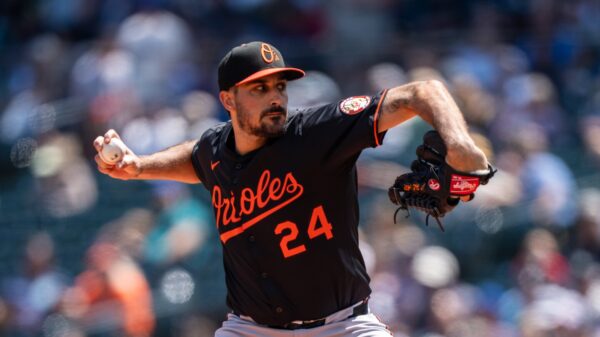
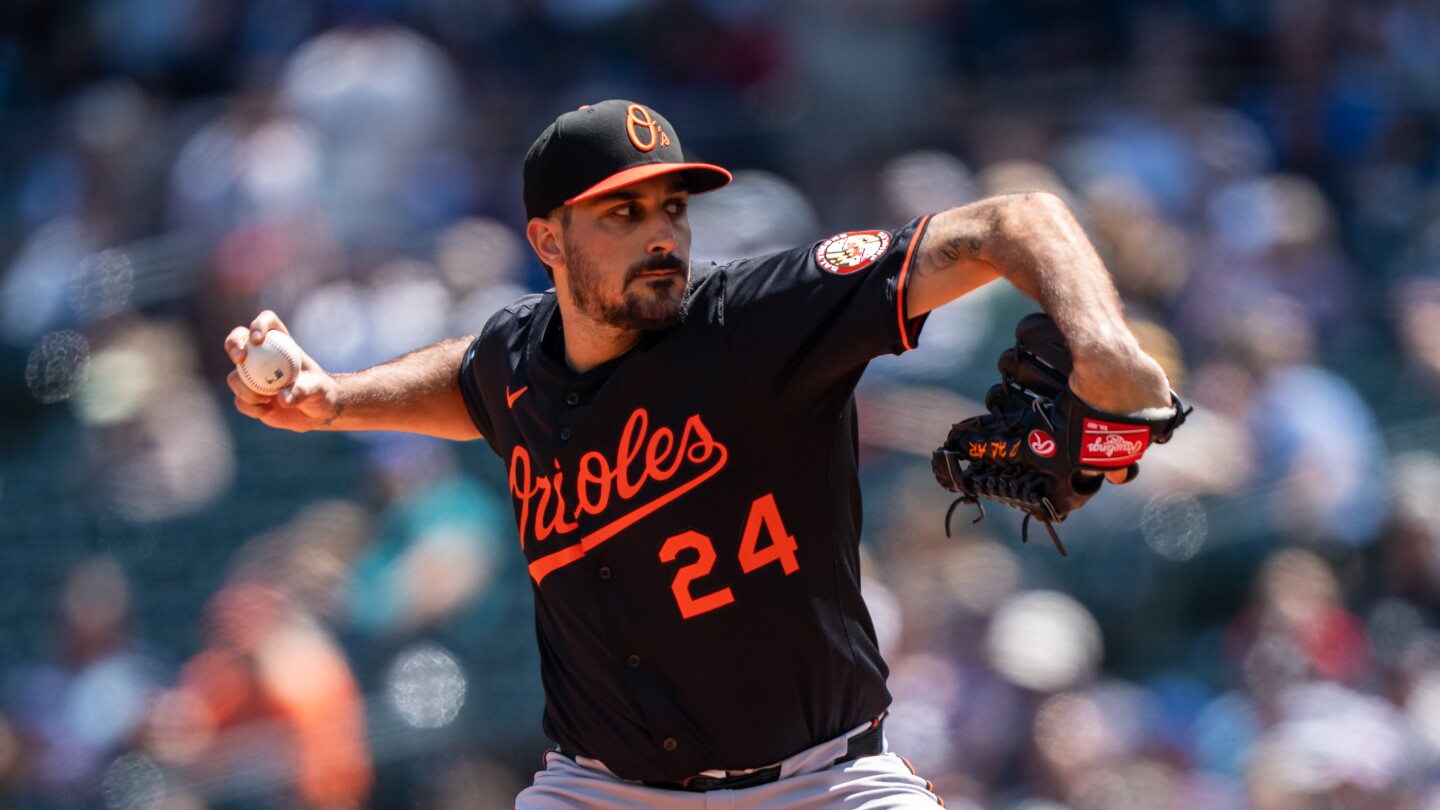
Zach Eflin – Baltimore Orioles (ADP: 353, 166th Pitcher Drafted)
Chance at 130 innings: Eflin dealt with a lower back injury throughout the 2025 season. It may have begun as he was trying to pitch through a lat strain and was compensating in ways that aggravated his back, but he wound up having to undergo lumbar microdiscectomy surgery, which is a “minimally invasive” procedure that removes a portion of a slipped disc in the lower back that had been pressing on the nerve. Eflin began throwing again in December and is a full participant in spring training, so we shouldn’t see much risk for innings.
Strikeout Upside: For this section, I think we need to look beyond 2025. We know that Eflin was pitching through injuries last year, but he had a 26.5% strikeout rate in 2023, and I think there is enough here to at least push a 21% mark, which would give him about 8 K/9. Last year, his sweeper had a nearly 22% SwStr% to righties, and his curve posted an above-average 14.5% mark to righties. Neither one of those pitches delivered in two-strike counts, but I think that likely has a lot to do with the location not being as precise as Eflin wanted it. Likely due to the back injury. Against lefties, his curve also posted a 17% SwStr%, but again, failed to deliver in two-strike counts. There isn’t tons of strikeout upside here, but Eflin does have two pitches that he can miss bats with, so there is a foundation to work from.
Fastball Success: Eflin is a cutter/sinker guy primarily, but he does use a four-seam fastball 15% of the time against lefties as well, so we’re dealing with three fastballs here. He relies mainly on the sinker to righties and the cutter to lefties, and while those pitches don’t miss bats, he does a good enough job of locating both in the zone, and they both limit hard contact. The sinker in particular has been a good groundball pitch for him against righties, so I like that combo as a foundation for his arsenal.
Deep Pitch Mix: This is partially where Eflin shines. He throws six pitches at least 9% of the time to righties, led by his sinker, sweeper, and curve. He also throws five pitches at least 15% of the time to lefties, led by the cutter, changeup, and curve. That’s a really deep pitch mix that can help mess with a hitter’s timing and keep them off the barrel. It’s also part of the season that Eflin posted such strong WHIPs from 2022-2024, and I believe he can do that again.
Confidence to finish in the top 25: 4/10. There isn’t a lot of strikeout upside here, which makes it hard to see a huge ceiling, but the only people pushing Eflin for innings in Baltimore are Dean Kremer, Cade Povich, and Brandon Young. The path for Eflin is 150-170 innings of solid ratios on a good team that pushes him to 12-14 wins. That is how you get a top 25 season, but I think you’re more likely to just get a solid top 50 season, which still makes him worth where he’s being drafted.
Jacob Latz – Texas Rangers (ADP: Undrafted, 188th Pitcher Drafted)
Chance at 130 innings: Between his MLB action and his Triple-A innings, Latz threw 101 innings last year, so a jump to 130 isn’t that crazy, and it’s more likely that he reaches 150 innings. Now, that is something that he hasn’t done in professional baseball, but Latz only has one major injury, with an elbow sprain back in 2019. He has just been in a hybrid role in the past, but I think this year he has a good shot to stick in the starting rotation.
Strikeout Upside: Latz had just a 22% strikeout rate last year, so you may not believe that there’s too much upside here, but he also had a 14.6% swinging strike rate, which is really appealing. As a left-handed pitcher, he has a changeup that he throws 30% of the time to righties and posts a 21.6% SwStr%. He only uses it in two-strike counts to righties 29% of the time, but it has an above-average PutAway Rate, so I think we could see some strikeout growth if he leans on the changeup more. His slider has also performed well in two-strike counts to righties, so he does have multiple avenues to attack them. It’s actually lefties who hit his slider better because it doesn’t have sweeper break. It had just league-average swinging strike rates to lefties and below league-average PutAway Rate, so the real issue for Latz may be how he gets swings and misses against lefties.
Fastball Success: Latz’s fastball is a solid pitch. It sits at 94 mph with above-average extension and elite vertical break, which gives it a flat attack angle. He uses it up in the zone well, particularly against righties, which is why the swinging strike rate is higher against them. The pitch doesn’t perform as well to lefties, but he attacks the zone with it well. If he had a sinker that he could jam inside to lefties, that might not only make the four-seam play up more but also set up the slider away even better. That could be a crucial pitch for Latz to develop.
Deep Pitch Mix: At the end of the day, Latz has a true three-pitch mix to righties, while mixing in the curveball about 8% of the time, but is just a two-pitch pitcher to lefties, while using his changeup 9% of the time against them. This is another place where we can come back to a sinker being a good addition for Latz, so we should keep an eye out for that. As it stands, Latz has a good fastball and a plus changeup to righties, and we saw guys like Noah Cameron ride that to a strong season in 2025. Latz could duplicate that type of success even without the sinker, but I think he’ll need to improve his swing-and-miss to lefties to truly break out.
Confidence to finish in the top 25: 2/10.
Starting Pitching Prospects Unlikely to Break Camp
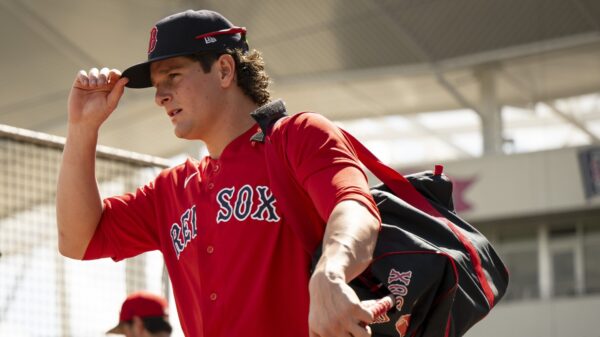
Payton Tolle – Boston Red Sox
Tolle rocketed through the Red Sox system last season, beginning the year in High-A and then finishing by throwing 16.1 innings for the Red Sox. It’s the type of rapid ascent that usually denotes a clear breakout season on the horizon, but the Red Sox added so much depth to their starting rotation this offseason that Tolle seems likely to begin the year in Triple-A. However, if he does get a chance to pitch for the Red Sox, he’s absolutely somebody to watch. At 6’6″, 250 pounds, Tolle is a huge dude, and his four-seam fastball could be the pitch in the minor leagues. He can command it well in the zone, and he also posted an absurd 23% swinging-strike rate. The pitch has elite extension, which helps the average velocity play up. In fact, many of the metrics on the fastball don’t stand out, but the arm angle and his command of it help it to produce elite results. He also adds to that a slider, cutter, changeup, and curveball. Those pitches certainly need refinement, but the Red Sox were working on that last year. He changed his changeup into a kick change, added a curveball, and then also added a cutter, which he used a ton in his brief MLB sample size. It often takes a while for new pitches to click, and last season was Tolle’s first season ever in professional baseball, so it makes sense to assume there will be continued growth in 2026.
Thomas White – Miami Marlins
Robbie Snelling may be the starting pitching prospect in Miami who gets an MLB chance first, but Thomas White is the higher upside option. The 17th overall prospect in baseball, according to MLB Pipeline, finished last season by just annihilating Double-A hitters, which earned him two starts in Triple-A. On the season, he had a 2.31 ERA, 1.18 WHIP, and 145/51 K/BB ratio in 89.2 innings. He’s always been good, but his strikeout rate jumped to the next level this season because of the addition of a kick-changeup. As you’ve read a bunch of times in this article, left-handed pitchers with elite changeups tend to be really hard to hit, and we can add Thomas White to that list. The pitch had some consistency issues last year, but it was his first year with the new grip, and I think it will be a major piece to complement his good four-seam fastball, gyro slider that he can command well inside the zone, and sweeper that he uses for swings and misses. Miami has a few weak links in its rotation now, so it wouldn’t be crazy for White to get an MLB start before June is done.
Read the full article here