


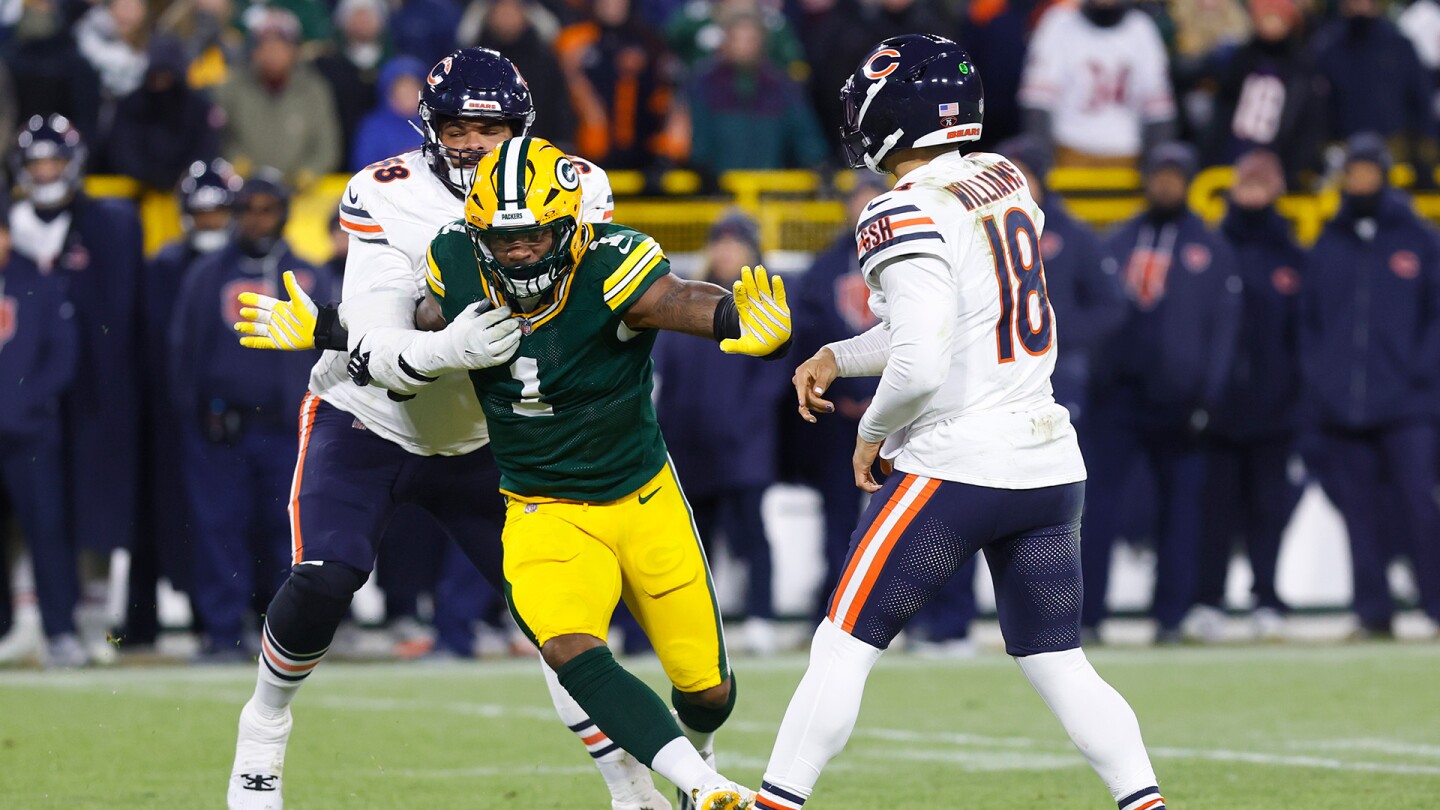
On Sunday, Da Bears constantly held Packers linebacker Micah Parsons, resorting at times to Da Bear Hug.
From the mugging to the choking to the grabbing to the pulling, it’s astounding that Parsons didn’t draw a single holding penalty.
But there’s a much larger problem. Holding is routinely not called by today’s NFL officials. Coincidentally (or not), the NFL wants yards and points and offensive excitement — especially as gamblers who bet the overs (as to the total score and/or the various crack-cocaine prop bets) keep watching the games deep into the fourth quarter to see whether their various wagers will prevail.
Before 1978, offensive linemen couldn’t extend their hands to block. They had to keep their fists together and elbows out, which has been immortalized by the electric football figure in the blocking posture that prevailed before the NFL realized that making it easier to block defensive linemen would open up the passing game.
Still, it has now gotten out of control. Late in the Week 8 game between the Vikings and Chargers, Prime Video played clips of some of left tackle Joe Alt’s plays during his first game back from a high ankle sprain. In every one of them, he was holding the pass rusher, to some degree.
He’s far from alone.
At this point, teams should be coaching their offensive linemen to do it. It’s similar to the Legion of Boom’s approach to covering receivers. Hold them on every single play, because the officials won’t bog the game down by constantly throwing flags.
As to holding, there are times when they never throw a flag.
So, yes, the Packers have a legitimate beef about the failure to call holding by the Bears. But the Packers should respond by telling their blockers to do the same thing to opposing defenders — if they haven’t already.
Put simply, the officials have allowed the sheer volume of holding fouls to overpower the system.
So hold ‘em if you got ‘em. The NFL wants yards and points and bets and viewers. Calling every hold that happens would directly impact each of those valuable factors of modern-day pro football.
Read the full article here