










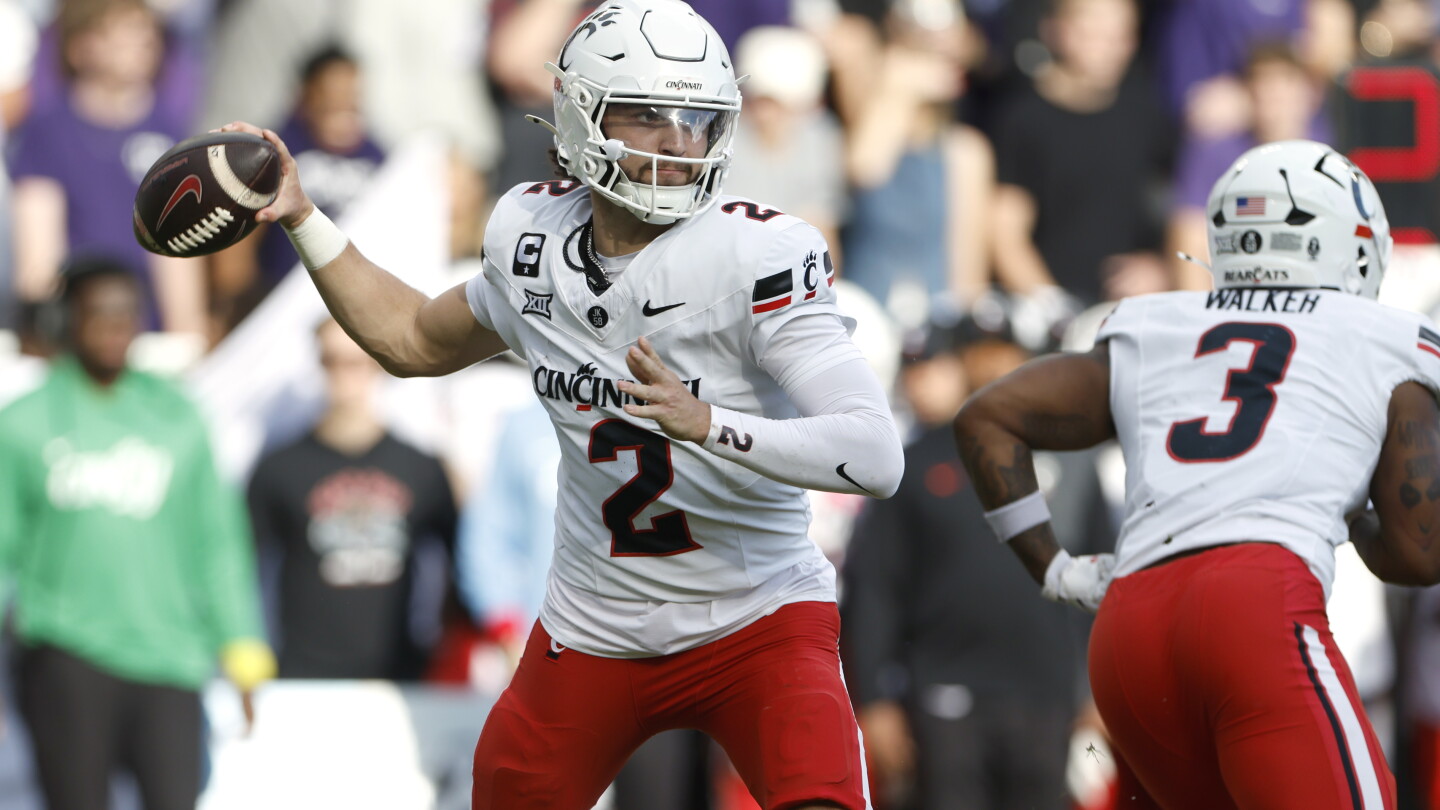
The Brendan Sorsby saga has given rise to an intriguing question about the period of time during which he was actively, and heavily, betting on sports in violation of NCAA rules.
What did Cincinnati know, and when did Cincinnati know it?
Earlier this week, agent Ron Slavin — while defending Texas Tech against the intense scrutiny it has absorbed over Sorsby — said that, if anyone should “catch heat,” it should be Cincinnati. As Slavin put it, Cincinnati “knew for two years and never said anything and didn’t do anything about it.”
Cincinnati thereafter issued a statement denying the contention.
Regardless, there’s enough there to require the NCAA to fully and completely investigate the situation. If Cincinnati truly knew nothing, and if it has nothing to hide, it should welcome the opportunity to show that it did not allow Sorsby to play at a time when (given that he had placed bets on Indiana while on the Indiana roster) he had permanently lost his NCAA eligibility.
Although the NCAA has lost most of its bite when it comes to players, given that many NCAA rules violate federal antitrust laws, the NCAA still has power over its members. And the hue and cry over Texas Tech’s intention to allow Sorsby to play (until it was strong-armed by the Big 12 into telling him he couldn’t) becomes hollow if Cincinnati allowed him to play at a time when it knew, or with the exercise of reasonable diligence should have known, that Sorsby was ineligible.
Whether and to what extent the NCAA explores the Bearcat rabbit hole will go a long way toward determining whether the firestorm of criticism directed by conferences, schools, and media members at Sorsby and Texas Tech after he secured an injunction against the NCAA was truly about integrity of sports, or whether it was performative nonsense aimed at helping push through Congress an antitrust exemption that will restore some of the NCAA’s power over the players — while also wiping out some of their freedom and earning capacity.
Read the full article here